
Introduction
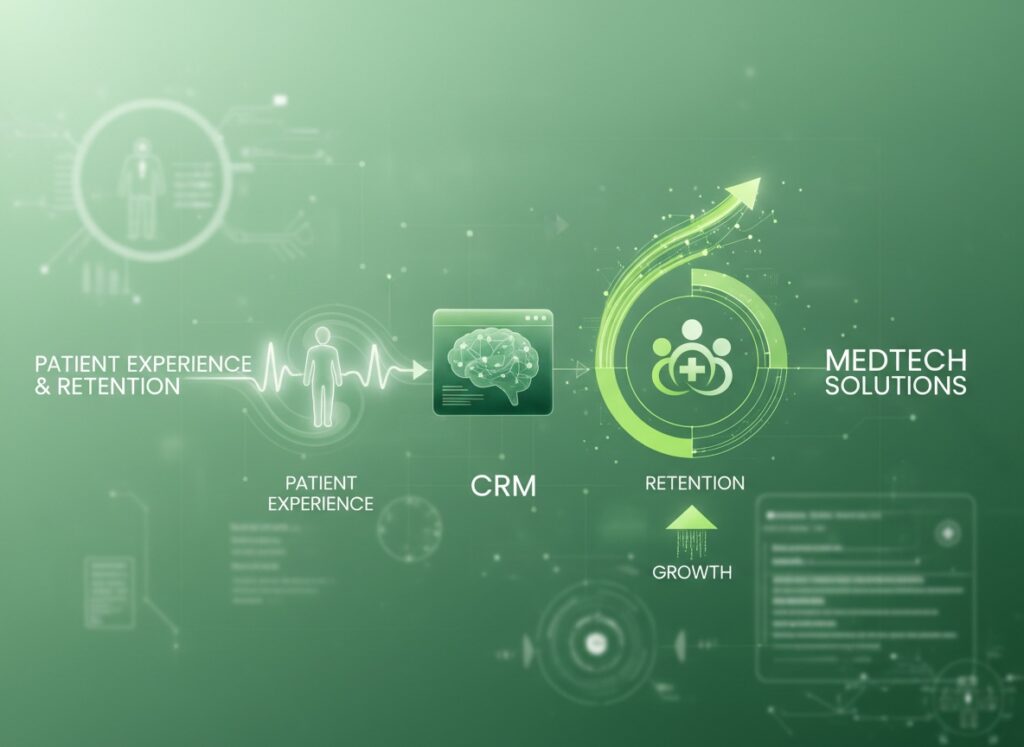
Patient experience has become a measurable part of healthcare quality, not just a “nice to have.” Today, healthcare organizations are increasingly using Customer Relationship Management (CRM) systems—such as Salesforce Health Cloud, Microsoft Dynamics 365, and HubSpot—to improve communication, streamline patient journeys, and increase patient retention.
For physicians and clinical leaders, a CRM should not be seen as a marketing tool alone. Instead, think of it as a patient relationship management system that complements the electronic health record (EHR) by organizing interactions, follow-ups, and patient engagement across the entire care cycle.
This article explains how CRMs improve patient experience and why they are becoming important for modern healthcare practices.
What Is a CRM in Healthcare?
A CRM in healthcare is a platform that tracks and manages interactions between your organization and patients across multiple touchpoints, including:
- Appointment scheduling
- Follow-up communications
- Preventive care reminders
- Patient education
- Billing and service inquiries
- Care coordination across departments
Unlike EHR systems, which primarily store clinical data, CRMs focus on the relationship and communication layersurrounding patient care.
For example:
A patient treated for hypertension may have their lab results and medications documented in the EHR, but the CRM can manage:
- Annual check-up reminders
- Lifestyle program outreach
- Telehealth follow-ups
- Patient satisfaction feedback
In practical terms, the CRM helps ensure patients do not “fall through the cracks.”
Why Patient Experience Matters in Healthcare?
Patient experience is closely linked to outcomes, adherence, and long-term engagement with a practice.
When patients feel:
- Well informed
- Supported between visits
- Able to access care easily
they are more likely to:
- Follow treatment plans
- Return to the same provider
- Recommend the practice to others
- Engage in preventive care
In competitive healthcare markets, patient retention has become an important operational metric alongside clinical outcomes.
How CRMs Improve Patient Experience
- Coordinated Communication with Patients
Patients often interact with multiple teams—front desk staff, nurses, specialists, billing departments. Without a CRM, communication can become fragmented.
A CRM creates a single view of the patient journey, allowing staff to see:
- Recent appointments
- Pending follow-ups
- Open patient inquiries
- Communication history
For physicians, this means:
- Fewer repeated questions
- More context during visits
- Better continuity of care
Example:
A patient calls about post-procedure symptoms. Staff can immediately see:
- Procedure date
- Discharge instructions sent
- Follow-up appointment schedule
This improves both safety and experience.
2. Automated Follow-Ups and Preventive Care
Many missed care opportunities occur simply because patients forget or delay appointments.
CRMs allow automated reminders for:
- Vaccinations
- Screenings (mammograms, colonoscopies)
- Chronic disease check-ins
- Medication monitoring
- Post-surgery follow-ups
From a clinical perspective, this helps practices:
- Improve population health management
- Reduce complications
- Increase preventive care compliance
For example, diabetic patients can be flagged automatically for:
- HbA1c testing intervals
- Retinopathy screening
- Foot exams
This transforms outreach from reactive to proactive care.
3. Personalized Patient Engagement
Modern CRMs allow segmentation of patients based on:
- Conditions
- Age group
- Risk profile
- Treatment stage
- Previous visits
This allows targeted communication such as:
- Educational materials relevant to their condition
- Post-treatment recovery instructions
- Wellness program invitations
For physicians, this means patients arrive better prepared and informed, which can improve consultation efficiency.
4. Reduced Administrative Burden
A major frustration in clinical practice is administrative overload.
CRMs can automate tasks such as:
- Appointment reminders
- Intake forms
- Referral tracking
- Patient surveys
- Follow-up scheduling
When integrated with an EHR, a CRM reduces manual communication work for staff and clinicians.
This allows the care team to focus more on:
- Clinical care
- Patient counseling
- Complex cases
The Role of CRMs in Patient RThe Role of CRMs in Patient Retention
Patient retention refers to a patient continuing to receive care from the same practice or healthcare organization over time.
Retention improves when patients experience:
- Easy scheduling
- Clear communication
- Consistent follow-up
- Trust and continuity of care
CRMs directly influence retention by improving these factors.
Key Retention Benefits of CRM Systems
1. Fewer Lost Patients
Patients who miss appointments or fail to schedule follow-ups can be automatically re-engaged.
2. Better Chronic Disease Management
Patients with long-term conditions remain connected to care plans.
3. Faster Response to Patient Needs
CRMs can route patient inquiries to the appropriate team quickly.
4. Improved Patient Satisfaction
Many CRMs integrate surveys that help identify issues early.etention
Implementing a CRM in a Medical Practice
Adopting a CRM should follow a clinical workflow perspective rather than a purely technical approach.
Step 1: Identify Patient Experience Gaps
Common issues include:
- Missed follow-ups
- Poor appointment adherence
- Low screening participation
- Communication delays
Step 2: Integrate with Existing Systems
Ensure compatibility with:
- EHR
- Scheduling software
- Telehealth platforms
- Patient portals
Step 3: Train Clinical and Administrative Staff
A CRM works best when:
- Front desk teams manage communication workflows
- Nurses monitor follow-ups
- Physicians review patient journey insights
Step 4: Start with High-Impact Use Cases
Many practices begin with:
- Appointment reminders
- Preventive care campaigns
- Post-visit follow-ups
Key Metrics to Measure Success
Healthcare organizations typically evaluate CRM impact using:
- Patient retention rate
- No-show rate reduction
- Preventive screening compliance
- Patient satisfaction scores
- Response time to patient inquiries
These metrics align with both clinical outcomes and operational efficiency.
Challenges and Considerations
While CRMs offer many benefits, physicians should be aware of potential challenges:
Data privacy and compliance
Systems must comply with healthcare regulations (HIPAA, GDPR, etc.).
Integration complexity
Not all CRMs integrate seamlessly with EHRs.
Staff adoption
Without proper training, tools may be underused.
Workflow alignment
Technology must support clinical processes, not disrupt them.
The Future of Patient Relationship Management
Healthcare CRMs are evolving toward:
- AI-driven patient engagement
- Predictive risk identification
- Automated care pathways
- Integration with remote monitoring devices
In the future, CRMs may play a significant role in preventive and value-based care models, helping healthcare providers manage populations more effectively.
Conclusion
For physicians and healthcare leaders, CRMs are becoming an important component of modern healthcare operations. By improving communication, automating follow-ups, and supporting preventive care, CRM systems help practices deliver better patient experiences while strengthening patient retention.
When implemented thoughtfully and integrated with clinical systems, a CRM can act as a bridge between clinical care and ongoing patient engagement—ensuring patients remain connected to their care journey long after they leave the consultation room.
Estimated reading time: 5 minutes